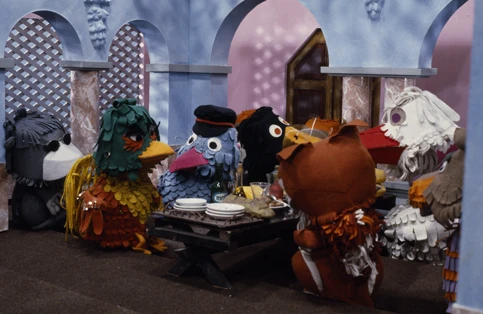
Playdays
British pre-school educational programme that replaced Play School.
Playdays was a British pre-school television programme that originally aired under the name Playbus until December 1989. It ran on Children's BBC from 17 October 1988 to 28 March 1997, taking over from Play School as an educational show. The BBC changed the title after the National Playbus Association lodged a complaint. Reruns later appeared on the CBeebies channel from 2002 until late August 2004.
Each episode began with an animated sequence showing the Playbus driving to a bus stop, which varied depending on the day of the week.
On Mondays, the programme visited the Why Bird Stop. Why Bird, a puppet voiced and operated by Ellie Darvill for nine series, lived at the Lost Property Office, where items left on the bus were stored until claimed. She interacted with several human bus drivers over the years—including Brian Jameson, Simon Davies, Simon Harbrow, Stuart Bradley, Matthew White, Paul Hawkyard, Philip Hawthorn, Royce Hounsell, and Charlie Grindle (played by Nick Mercer). Why Bird used a computer called the Why-Tech, which could play music, show pictures for stories, give instructions for making things, or help with songs. At least five different Why-Techs were used: the first had a brown wood effect and was used until 1990; the second was remote-controlled and used from about June 1990 until 1992; a blue one first appeared in episode 105 in June 1992 and continued in the opening credits to the end of the series, though it was replaced by another blue model a few months later. The computer also showed videos, often demonstrating how everyday items like socks and toothbrushes were made. Sometimes Peggy or Poppy, or both, visited the Lost Property Office. In later series, a telephone was installed, allowing characters to call in with requests, such as information about spiders or a nighttime picture for someone trying to sleep during the day.
Tuesdays featured the Playground Stop. Each episode opened with a presenter—including Dave Benson Phillips, Elizabeth Watts, Elizabeth Fost, Zoe Ball, or Chris Jarvis—saying, "Boys and Girls, come out to play..." followed by the day's theme, such as racing games or activities about time. The show included a group of children doing activities like pretending to cook and making paper meals. Dave Benson Phillips worked with a hand puppet named Chester, while Elizabeth Fost had a puppet called Ruby. A rhyme was alway
- First aired
- 17 October 1988
- Last aired
- 28 March 1997
- Original network
- Children's BBC
- Genre
- Pre-school educational television
- Successor to
- Play School
- Rerun channel
- CBeebies (2002–late August 2004)
Lore & Background
The show began with an animated title sequence of the Playbus driving to a bus stop, which changed each day. Monday was the Why Bird Stop, featuring Why Bird, voiced and puppeteered by Ellie Darvill for nine series, who lived at the Lost Property Office and used a computer called the Why-Tech. Tuesday was the Playground Stop, where presenters like Dave Benson Phillips and Elizabeth Fost led children in activities, rhymes with Makaton sign language, and songs by a marionette named Lizzie. Wednesday originally featured the Dot Stop (1988–1992) with non-speaking Dot and later three Dots, then became the Roundabout Stop (1992–1997) with Mr. Jolly and a carousel called Rosie. Thursday was the Patch Stop, featuring Sam Patch or Peggy Patch, a rag doll who gained a voice in 1994. Friday was the Tent Stop (1988–1995), with actors performing plays, then the Poppy Stop (1995–1997) at Poppy the cat's house. Special Christmas episodes from 1989–91 featured the Christmas Tree Stop.
Reader's Guide
Playdays was a significant part of British children's television in the late 1980s and 1990s, providing structured educational content through themed daily stops. Its format encouraged learning through play, music, and storytelling, with segments like the Why Bird Stop using a computer to teach concepts. The show's longevity—nearly nine years—and its move to CBeebies for reruns in the early 2000s indicate its lasting appeal. It featured a rotating cast of presenters and puppets, including Why Bird, Peggy Patch, and Mr. Jolly, and incorporated live tours. The programme's legacy lies in its role as a successor to Play School and its influence on pre-school programming, though it is less widely remembered today.
Did You Know?
- The show was originally called Playbus until December 1989, when the name changed after a complaint from the National Playbus Association.
- Why Bird's computer, the Why-Tech, had at least five different versions over the series, including a remote-controlled model used from about June 1990 until 1992.
- The Roundabout Stop featured a carousel called Rosie, whose platform initially had no objects to ride on.
- A special 40-minute direct-to-video special called Winter Adventure was released in 1997.
Frequently Asked Questions
What is Playdays?
Playdays is a British pre-school educational television programme that broadcast on Children's BBC from 17 October 1988 to 28 March 1997. It was created to carry on the live, classroom-style format that Play School had established for young viewers.
Why was the show originally called Playbus?
The programme launched in 1988 under the title Playbus, but the BBC had to rename it after the National Playbus Association lodged a complaint over the use of that name. From December 1989 onward the show aired as Playdays.
What programme did Playdays replace?
Playdays took over the pre-school slot from Play School, the BBC's long-standing educational show for young children, when it debuted in October 1988.
How did each Playdays episode open?
Every episode began with a short animated sequence in which the Playbus drove to a bus stop, and the destination changed according to the day of the week. For instance, Monday's stop was the Why Bird Stop.
Where did Playdays reruns air after the original run ended?
After the final new episode in March 1997, the show returned to British screens on the CBeebies channel, where reruns ran from 2002 until late August 2004.
More in part-1
Spotted an error? Know more?
This is a living reference — every entry is fact-audited, and reader corrections feed straight into our audit queue. Suggest an edit · See this site's audit record